


Monday, November 10, 2025
35.4 F
Atlanta

Sarah’s Oil: What Would Sarah Rector Do in 2025?

sarah's oilIn a world saturated with 24-hour news cycles of division, economic uncertainty, and a pervasive sense of anxiety, it’s easy for many to feel as though the odds are insurmountably stacked against us.

We find ourselves asking: where do we find the strength to persevere when our own land feels barren?

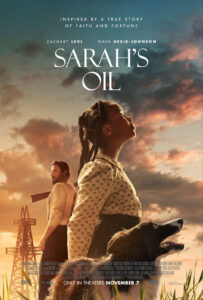
A powerful new film from Kingdom Story Company and Amazon MGM Studios, Sarah’s Oil, offers a profound answer by looking back over a century into the past. The film, arriving in theaters everywhere Friday, November 7th, doesn’t just recount the astonishing true story of an 11-year-old millionaire; it poses a vital question for our time: What would Sarah Rector do in 2025?

Sarah’s Oil is a masterful biographical drama that unearths the “lost piece of Black history” that is Sarah Rector’s life. Inspired by Tonya Bolden’s authoritative book, “Searching for Sarah Rector,” the film introduces us to a young African-American girl born in Oklahoma Indian Territory in the early 1900s. As a descendant of Creek Freedmen, Sarah inherited 160 acres of land considered so rocky and infertile that it was a struggle for her family to even pay the annual taxes. Yet, where adults saw wasteland, Sarah saw potential. Her unwavering, childlike faith led her to believe there was oil beneath the soil—a belief that would prove spectacularly right, turning her into one of America’s first Black female millionaires at the tender age of eleven.

But as the film makes clear, this is not a simple rags-to-riches tale. It is, as the filmmakers state, a “parable of faith tested by sudden wealth, adversity, and the search for purpose.” Directed by Cyrus Nowrasteh and starring a brilliant cast including Zachary Levi, Sonequa Martin-Green, and a dazzling newcomer in Naya Desir-Johnson as Sarah, the movie is a gripping exploration of the immense character required to navigate a world determined to see you fail. It’s a story of impossible odds, and it provides a powerful blueprint for how we can face the giants in our own lives today. Let’s take a look.

sarah's oil
Amazon MGM Studios

The Audacity of Tenacity

The first lesson from Sarah’s life is the sheer power of tenacity rooted in conviction. The challenges she faced were monumental. Beyond the seemingly worthless land, she lived in a “racially hostile America” (ring any bells?) with a terrifying reality: children were being murdered so their land could be stolen. Once her wealth was discovered, she and her family were immediately troubled on every side by “greedy oil sharks,” public misinformation, and the constant need to discern who could be trusted.

In today’s challenging times, we may not face hostile oil sharks, but we do face our own forms of overwhelming opposition. We face economic systems that feel rigged or unfair, governmental instability that seems unhinged, and personal struggles that threaten to consume us. The temptation to throw in the towel can be immense.

But what would Sarah Rector do? She would, as her family historian notes, refuse to accept ‘no.’

Her tenacity was not mere stubbornness; it was the external expression of an internal, God-given conviction. She believed what she had was important, even when no one else did. This is an urgent call for us today to cling to the vision God has given us, even when the world says we’re only gripping barren rock. We, too, must be courageous enough to drill down in faith when everyone else tells us to walk away.

A Faith That Sees the Invisible

At the core of Sarah’s tenacity was a profound and active faith. The film beautifully portrays this not as a generic, passive hope, but as a deeply centered sense of God’s provision. We see the immense value of childlike faith and why Jesus instructs us to adopt this mindset in our approach to the kingdom of heaven (Matthew 18:3).

This is perhaps the most crucial lesson for the kingdom of God. In an age of cynicism, Sarah’s story reminds us that faith is not about having all the answers but about trusting the One who does. It’s about having a clarity of vision that is not clouded by the world’s skepticism.

When faced with challenges today, how often do we allow our adult “logic” to extinguish the flame of a God-given dream?

Sarah’s journey in Sarah’s Oil is a beautiful cinematic reminder that our faith is meant to be a lens that reveals possibilities the world cannot see—sometimes, we can’t even see. It is the firm belief that God can create abundance from the most desolate of places, a truth that is just as relevant to us now as it was for a dusty piece of land in 1913.

Collective Strength: Dependence on God and Each Other

Finally, Sarah’s story is a powerful rebuke to the radical individualism of our time. She did not overcome harsh trials in a silo or vacuum. Her dependence on her family and her community magnified her strength. When the greatest threats emerged, it was the entire community that rallied to protect her.

What would Sarah Rector do in 2025?

She would reject the notion that we must face our struggles in isolation. She would lean on her church, her family, and her neighbors. She would understand that faith is not just something you do on your own; faith intimately involves other people, where we bear one another’s burdens and find strength in fellowship.

In a time of digital isolation and broken relationships in families and communities, Sarah’s Oil is a call to rebuild these bonds, to recognize that our resilience is multiplied when we stand together in faith and unity.

Troubled on Every Side: What Are We Going to Do?

Sarah’s Oil is more than a movie; it is a timely and urgent message—a story that, as actor Zachary Levi states, “everyone should know.”

The film challenges us to ask how we can model childlike faith with our Father when we face intense adversity. It invites us to consider what we would do if blessed with the opportunity of sudden fortune that required immense struggle.

The cheat code, modeled by a wise-beyond-her-years 11-year-old girl, is to anchor ourselves in unshakeable faith, act with relentless tenacity, and bind ourselves to God first and our community.

This is a film that will leave you not only inspired by Sarah Rector’s life but also empowered to write your own story of overcoming the impossible to experience the possible.

Don’t miss Sarah’s Oil, a powerful story of faith and fortune, in theaters everywhere Friday, November 7th.

Subscribe
Notify of
guest

0 Comments
oldest
newest most voted
Inline Feedbacks
View all comments

HIGHLIGHTS

Sarah’s Oil Producer Derrick Williams on Faith, Community & Overcoming Odds

The powerful story of Sarah Rector is one that...

Sarah’s Oil, November 7th

Know Her name. Share Her Story. About Sarah’s Oil is the...

They Changed Their Minds about Slavery and Left a Bible Record

Two businessmen’s unusual conversion in 1700s South Carolina led them to liberate the people they put in bondage. At first glance, William Turpin and his business partner, Thomas Wadsworth, appeared to be like most other prestigious and powerful white men in late 18th-century South Carolina. They were successful Charleston merchants, had business interests across the state, got involved in state politics, and enslaved numerous human beings. Nothing about them seemed out of the ordinary. But, quietly, these two men changed their minds about slavery. They became committed abolitionists and worked to free dozens of enslaved people across South Carolina. When most wealthy, white Carolinians were increasingly committed to slavery and defending it as a Christian institution, Turpin and Wadsworth were compelled by their convictions to break the shackles they had placed on dozens of men and women. In an era when the Bible was edited so that enslaved people wouldn’t get the idea that God cared about their freedom, Turpin left a secret record of emancipation in a copy of the Scriptures, which is now in the South Carolina State Museum. Perhaps it’s not surprising that this story of faith and freedom is mostly unknown. The two men were, after all, working not to attract attention. Neither had deep roots in Charleston or close familial ties to its storied white “planter” dynasties. Turpin’s family was originally from Rhode Island, and Wadsworth was a native of Massachusetts who moved to South Carolina only shortly after the American Revolution. Both had public careers and served in the South Carolina Legislature, but their political profiles were not particularly high. Neither of them appeared to give any of their legislative colleagues the sense that they were developing strong, countercultural opinions on one of the most ...Continue reading...

Trolls Band Together in Theaters November 17th

Nothing's Stronger Than Family Harmony About This holiday season, get ready...

Are State Laws the Solution to Kids’ Access to Porn?

As data continues to show the harms of viewing porn, particularly for children, support for stricter legal limits on pornographers has grown.

Topics

Sarah’s Oil, November 7th

Know Her name. Share Her Story. About Sarah’s Oil is the...

They Changed Their Minds about Slavery and Left a Bible Record

Two businessmen’s unusual conversion in 1700s South Carolina led them to liberate the people they put in bondage. At first glance, William Turpin and his business partner, Thomas Wadsworth, appeared to be like most other prestigious and powerful white men in late 18th-century South Carolina. They were successful Charleston merchants, had business interests across the state, got involved in state politics, and enslaved numerous human beings. Nothing about them seemed out of the ordinary. But, quietly, these two men changed their minds about slavery. They became committed abolitionists and worked to free dozens of enslaved people across South Carolina. When most wealthy, white Carolinians were increasingly committed to slavery and defending it as a Christian institution, Turpin and Wadsworth were compelled by their convictions to break the shackles they had placed on dozens of men and women. In an era when the Bible was edited so that enslaved people wouldn’t get the idea that God cared about their freedom, Turpin left a secret record of emancipation in a copy of the Scriptures, which is now in the South Carolina State Museum. Perhaps it’s not surprising that this story of faith and freedom is mostly unknown. The two men were, after all, working not to attract attention. Neither had deep roots in Charleston or close familial ties to its storied white “planter” dynasties. Turpin’s family was originally from Rhode Island, and Wadsworth was a native of Massachusetts who moved to South Carolina only shortly after the American Revolution. Both had public careers and served in the South Carolina Legislature, but their political profiles were not particularly high. Neither of them appeared to give any of their legislative colleagues the sense that they were developing strong, countercultural opinions on one of the most ...Continue reading...

Trolls Band Together in Theaters November 17th

Nothing's Stronger Than Family Harmony About This holiday season, get ready...

Are State Laws the Solution to Kids’ Access to Porn?

As data continues to show the harms of viewing porn, particularly for children, support for stricter legal limits on pornographers has grown.

The Burial: A Glimpse Into the Life of William Gary

The Burial: Based on a True Events About Inspired by true...

Pandemic Restrictions Had No Lasting Effect on Churches, Study Finds

Even in states where regulations were severe, most congregations moved on quickly. Jeff Schoch was ready to be done with COVID-19 health safety regulations. Like most ministers in the US, the pastor of Crossroads Bible Church in San Jose, California, did his best to comply with the many pandemic rules imposed by state and local governments. But as soon as they were lifted, he wanted to put them all behind him. He quickly tore down the state-mandated signs about social distancing, hand washing, and masks. “I got rid of every visual reminder in the church,” Schoch told CT. “I was anxious, personally, to make that a memory.” Across the country, Protestant congregations are dealing with the long-term impacts of the pandemic. A new, extensive study by Arbor Research Group and ChurchSalary, a ministry of Christianity Today, found that a lot of pastors are still in crisis. Some furloughed staff members haven’t gone back to work. And even when attendance numbers have rebounded, there are still people missing from many congregations. Christian leaders will likely be grappling with the fallout from COVID-19 for years to come. But, surprisingly, state-level pandemic restrictions had no measurable, lasting impact on American churches. Even in places like San Jose—where the county government imposed some of the strictest rules in the country, the restrictions changed frequently, and authorities aggressively went after churches they said failed to comply—pastors like Schoch were able to just move on. The data doesn’t show any adverse effects from the government regulations. Eric Shieh, a research consultant for Arbor Research, said that surprised him. “You would think that the restrictions made things tougher for churches. They didn’t meet as much, and so you’d ...Continue reading...

A Million Miles Away Trailer: Some Dreams Are Closer Than You Think

Catch "A Million Miles Away", inspired by the real-life story and grit of NASA flight engineer José Hernández

Related Articles

Popular Categories

spot_imgspot_img
0
Would love your thoughts, please comment.x
()
x