


Taneshia Yerby is the founder of Christian Entrepreneur Organization (CEO For Women) and the author of From Dreams to Drive.
Team Jesus Magazine: One of your key messages is, “Your assignment may change, but your overall purpose remains the same.” How can you identify what your God-given purpose and gifts are?
Taneshia Yerby:Depending on the season, your assignment may look different. This is why I always encourage people to stay open to change. Don’t fall into the trap of thinking there’s only one way of doing things. God knows how to pull your full potential out of you, and sometimes having to pivot is how He pushes us out of our comfort zone and to our next level.If you’re still unsure of your purpose and what your God-given gifts are, here’s my advice: You discover your purpose by simply showing up and doing life with God.As for identifying your gifts: Pay attention to the things that your peers and others come to you for. It may not always be the thing that you’re expecting. Take mental note of what comes to you with ease—thingsyou do that are not for personal gain but that push others closer to God and encouragethem to grow. The Bible tells us that we are to use our gifts to serve one another (1 Peter 4:10). That is often the clearest sign of how God wants to use you.
Team Jesus Magazine: Share more on how clarity comes after taking action.
Taneshia Yerby:Experience and obedience are your best teachers. God rarely reveals the entire blueprint all at once (and we should be so thankful for that!). I truly believe that He gives us instructions as we move our feet. The more you continue to show up, the more you’ll start to notice your path taking shape. Seeking clarity is just another opportunity for you to exercise your faith and trust God through your obedience.
Team Jesus Magazine: What would you say to someone who feels stuck and in a season of stagnancy?
Taneshia Yerby:Go back to the last thing God told you to do. Did you complete it? Or is this something that you left unfinished? Maybe the momentum you’re looking to gain is on the other side of that.I would also encourage you to spend time journaling with God. Sometimes you just need to write it out (Habakkuk 2:2). Sometimes mental overload is the thing that causes us to feel stuck—we don’t know what step to take first, so we don’t move at all. Writing things out is the best way to release that mental load and create a well thought-out action plan.
Team Jesus Magazine: How would you encourage someone who has faced failure in the past and is afraid to try again?
Taneshia Yerby:Most of us aren’t really afraid of failing; we’re afraid of other people seeing us fail. But here’s the thing: your past failures are meant to guide you, not silence you. So, the less you entertain the thoughts of failure being a bad thing, the quicker you can move on to your next adventure. Keep a mental note of what worked and what didn’t, and use that as a guide as you move forward.
Team Jesus Magazine: Can you share more on how your obedience can be the key to someone else’s breakthrough?
Taneshia Yerby:It’s a domino effect. When you show up, not only do you show others what obedience looks like, but you
may have a direct impact on how they show up for their own calling.Using your gifts may very well be the thing that opens the doors for them to use theirs, which will in turn open the doors for anyone else attached to them. It’s all connected. One act of obedience has the power to trickle down to the generations to come.
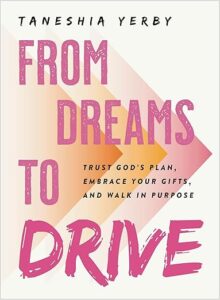
GET YOUR COPY of From Dreams to Drive today and live out loud in all that God has purposed for your life.
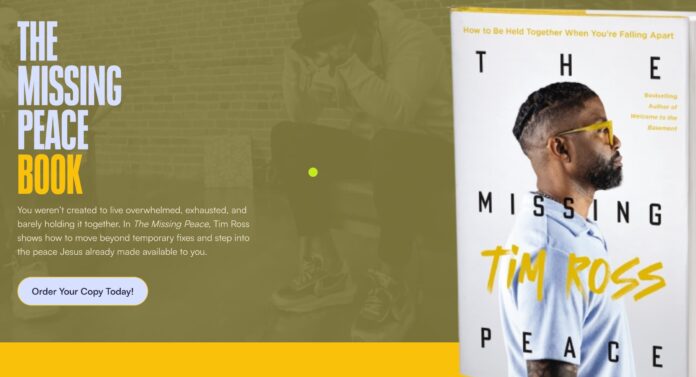
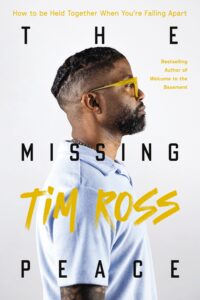
Tim Ross is the host of the popular podcast The Basementand author of The Missing Peace, released today, May 5, 2026.
Tim Ross shows Team Jesus how to move beyond temporary fixes and step into the peace Jesus already made available to you. Check out our interview with Tim Ross below.
Team Jesus Magazine: Your book is called The Missing Peace. In a world that seems more chaotic than ever, how do you define the kind of “peace” you’re talking about? Is it different from simply being happy or calm?
TimRoss: The peace I’m talking about isn’t based on what’s happening around you. It’s something internal. It’s anchored. It’s something you carry.Most people think peace means everything is going right. No stress, no pressure, no problems. But real peace is what regulates you when everything is going wrong. Happiness is emotional and comes and goes. Calm can be situational. But this kind of peace is rooted in God and shows up in your body. It steadies you.There’s a difference between looking peaceful and actually being at peace. You can smile and still be falling apart inside. The kind of peace I’m talking about stabilizes you from the inside out so your circumstances don’t get to define you.
Team Jesus Magazine: A major theme is learning to create safety within your body, mind, and environment. What is one practical first step someone can take today to make their body a safer place?
Tim Ross: The first step is slowing down long enough to actually notice what’s going on inside your body without trying to fix it right away.Most people are disconnected. We either numb out or push through. But your body is always telling the truth, even when your mind is just trying to survive.So start simple. Pause. Take a slow breath. Ask yourself, what am I feeling in my body right now? Not what you think. What you feel. Tight chest, shallow breathing, tension in your shoulders. Those aren’t problems; those are signals.When you can sit with what you’re feeling without judging it, you start teaching your body that it’s safe to feel. That’s where healing begins.
Team Jesus Magazine: You distinguish between “vertical healing” (with God) and “horizontal healing” (with people). Why are both necessary for true wholeness?
Tim Ross: Vertical healing is your relationship with God. That’s where your identity gets rooted. That’s where you learn your worth and your belonging.But horizontal healing is what happens in relationships with people. That’s where everything gets tested. You can feel completely loved by God when you’re by yourself but still get triggered, defensive, or shut down when you’re around others.That’s the gap a lot of people live in. Spiritually secure but relationally struggling.God may reveal what needs healing, but people are usually where it shows up. And that’s part of the process. Real wholeness happens when what God does in you actually changes how you show up with others. You need both.
Team Jesus Magazine: One of the most powerful lines in your book is, “Vulnerability is a superpower.” For someone who views vulnerability as a weakness or a risk, can you explain why it is so powerful?
Tim Ross: Vulnerability feels like a risk because for a lot of us it was a risk. At some point being open got us hurt, rejected, or misunderstood. So we learned to protect ourselves and called that strength.But a lot of what we call strength is really just isolation dressed up nice.Vulnerability is powerful because it’s the only way you actually heal and connect. You can’t heal what you hide. You can’t be fully loved if people only see part of you.Now it has to be done wisely. This isn’t about telling everything to everybody. It’s about telling the truth in safe spaces.And when you’re fully seen and not rejected, something shifts inside of you. That’s real power.
Team Jesus Magazine: The book addresses breaking generational cycles of trauma, addiction, and abuse. What kind of legacy do you hope to create, and how can readers begin building new, healthier legacies for their families?
Tim Ross: I’m not just trying to change my life. I’m trying to stop patterns that were handed to me so they don’t get passed down.Legacy isn’t just what you leave behind. It’s what stops with you.The anger, the silence, the addiction, the emotional distance. That cycle can end if somebody decides to do the work.For me, the legacy is emotional safety, spiritual depth, and honesty in relationships. I want my ceiling to be my kids’ floor.For readers, it starts with awareness. You have to name what was unhealthy without pretending it didn’t affect you. Then you do the work. Get support. Make different choices even when it feels uncomfortable.You don’t have to be perfect. You just have to be intentional. That’s how things change.
Team Jesus Magazine: If a reader takes away only one message from The Missing Peace, what do you hope it is?
TimRoss: That healing isn’t something you have to perform. It’s something you’re allowed to experience.You’re not too broken. You’re not too far gone. You’re not too late.The peace you’re looking for isn’t somewhere out there. It’s something God wants to build inside of you.And it doesn’t come from avoiding your story. It comes from facing it with the right support and the right truth.You don’t have to keep surviving your life. You can actually feel safe in it.
If you’re searching for peace that goes beyond your feelings and transforms your soul, grab your copy of The Missing Peace today.
Six years ago, Pastor Mike Todd wrote a declaration of faith on a piece of paper: “This book will be a movie.” Now, with the Prime Video release of Relationship Goals on February 4th, that prophecy has become a reality. We sat down with the visionary author and pastor to discuss the incredible journey from a viral sermon series to a Hollywood blockbuster.
It’s a story of “crazy faith,” patience, and profound personal transformation. In our exclusive interview, Pastor Mike Todd gets refreshingly candid about the six-year gap between the initial vision and the film’s premiere, a period he describes as a time of divine preparation. “The greatest things that have the most value take time,” Todd shares, reflecting on how God was working on him and his own marriage during the wait.
When brilliant TV producer Leah Caldwell (Kelly Rowland) is about to make history as the first woman to run New York’s top morning show, her ex Jarrett Roy (Clifford “Method Man” Smith) swoops in to compete for the same position. He claims he’s a changed man, transformed by the wisdom of the New York Times bestselling book ‘Relationship Goals.’ As her tight-knit circle of friends dive into the same life-changing book, they all begin to rediscover their aim in love. Yet Leah, laser-focused on breaking through the glass ceiling, isn’t ready to believe in finding love—even as her undeniable chemistry with her ex threatens to reignite old flames.
Directed By Linda Mendoza
Starring Kelly Rowland, Cliff “Method Man” Smith, Robin Thede, Annie Gonzalez, Dennis Haysbert, Matt Walsh
Written By Laura Lekkos, Michael Elliot, and Cory Tynan
Inspired By the NYT Best-Selling Novel By Michael Todd
Produced By DeVon Franklin p.g.a.
Executive Produced By Bart Lipton, Michael Todd, Kelly Rowland
The powerful story of Sarah Rector is one that has been hidden for far too long, but with the upcoming release of the film Sarah’s Oil, her incredible journey of faith and perseverance is finally being brought to light. This is more than just a movie; it’s a testament to the strength found in faith, the power of community, and the courage to believe in God’s plan against all odds.
To delve deeper into the heart of this film, Team Jesus Mag publisher Kim Bright got a chance to sit down with producer, Mr. Derrick Williams. In this exclusive conversation, they discuss the film’s potential to inspire a new generation, the critical importance of mentorship in today’s world, and how the story of Sarah Rector is a powerful reminder of what can be achieved when a community stands together in faith.
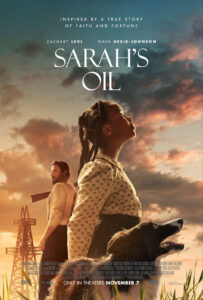
Watch the full interview below, and be sure to take your family and friends to see the powerful and inspiring film, Sarah’s Oil, in theaters everywhere on Friday, November 7th.
In a world saturated with 24-hour news cycles of division, economic uncertainty, and a pervasive sense of anxiety, it’s easy for many to feel as though the odds are insurmountably stacked against us.
We find ourselves asking: where do we find the strength to persevere when our own land feels barren?
A powerful new film from Kingdom Story Company and Amazon MGM Studios, Sarah’s Oil, offers a profound answer by looking back over a century into the past. The film, arriving in theaters everywhere Friday, November 7th, doesn’t just recount the astonishing true story of an 11-year-old millionaire; it poses a vital question for our time: What would Sarah Rector do in 2025?
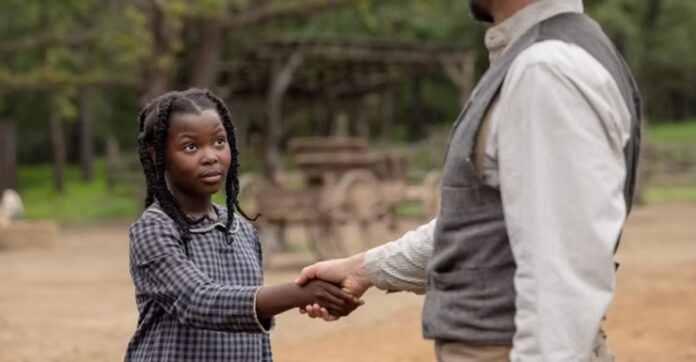
Sarah’s Oil is a masterful biographical drama that unearths the “lost piece of Black history” that is Sarah Rector’s life. Inspired by Tonya Bolden’s authoritative book, “Searching for Sarah Rector,” the film introduces us to a young African-American girl born in Oklahoma Indian Territory in the early 1900s. As a descendant of Creek Freedmen, Sarah inherited 160 acres of land considered so rocky and infertile that it was a struggle for her family to even pay the annual taxes. Yet, where adults saw wasteland, Sarah saw potential. Her unwavering, childlike faith led her to believe there was oil beneath the soil—a belief that would prove spectacularly right, turning her into one of America’s first Black female millionaires at the tender age of eleven.
But as the film makes clear, this is not a simple rags-to-riches tale. It is, as the filmmakers state, a “parable of faith tested by sudden wealth, adversity, and the search for purpose.” Directed by Cyrus Nowrasteh and starring a brilliant cast including Zachary Levi, Sonequa Martin-Green, and a dazzling newcomer in Naya Desir-Johnson as Sarah, the movie is a gripping exploration of the immense character required to navigate a world determined to see you fail. It’s a story of impossible odds, and it provides a powerful blueprint for how we can face the giants in our own lives today. Let’s take a look.
Amazon MGM Studios
The Audacity of Tenacity
The first lesson from Sarah’s life is the sheer power of tenacity rooted in conviction. The challenges she faced were monumental. Beyond the seemingly worthless land, she lived in a “racially hostile America” (ring any bells?) with a terrifying reality: children were being murdered so their land could be stolen. Once her wealth was discovered, she and her family were immediately troubled on every side by “greedy oil sharks,” public misinformation, and the constant need to discern who could be trusted.
In today’s challenging times, we may not face hostile oil sharks, but we do face our own forms of overwhelming opposition. We face economic systems that feel rigged or unfair, governmental instability that seems unhinged, and personal struggles that threaten to consume us. The temptation to throw in the towel can be immense.
But what would Sarah Rector do? She would, as her family historian notes, refuse to accept ‘no.’
Her tenacity was not mere stubbornness; it was the external expression of an internal, God-given conviction. She believed what she had was important, even when no one else did. This is an urgent call for us today to cling to the vision God has given us, even when the world says we’re only gripping barren rock. We, too, must be courageous enough to drill down in faith when everyone else tells us to walk away.
A Faith That Sees the Invisible
At the core of Sarah’s tenacity was a profound and active faith. The film beautifully portrays this not as a generic, passive hope, but as a deeply centered sense of God’s provision. We see the immense value of childlike faith and why Jesus instructs us to adopt this mindset in our approach to the kingdom of heaven (Matthew 18:3).
This is perhaps the most crucial lesson for the kingdom of God. In an age of cynicism, Sarah’s story reminds us that faith is not about having all the answers but about trusting the One who does. It’s about having a clarity of vision that is not clouded by the world’s skepticism.
When faced with challenges today, how often do we allow our adult “logic” to extinguish the flame of a God-given dream?
Sarah’s journey in Sarah’s Oil is a beautiful cinematic reminder that our faith is meant to be a lens that reveals possibilities the world cannot see—sometimes, we can’t even see. It is the firm belief that God can create abundance from the most desolate of places, a truth that is just as relevant to us now as it was for a dusty piece of land in 1913.
Collective Strength: Dependence on God and Each Other
Finally, Sarah’s story is a powerful rebuke to the radical individualism of our time. She did not overcome harsh trials in a silo or vacuum. Her dependence on her family and her community magnified her strength. When the greatest threats emerged, it was the entire community that rallied to protect her.
What would Sarah Rector do in 2025?
She would reject the notion that we must face our struggles in isolation. She would lean on her church, her family, and her neighbors. She would understand that faith is not just something you do on your own; faith intimately involves other people, where we bear one another’s burdens and find strength in fellowship.
In a time of digital isolation and broken relationships in families and communities, Sarah’s Oil is a call to rebuild these bonds, to recognize that our resilience is multiplied when we stand together in faith and unity.
Troubled on Every Side: What Are We Going to Do?
Sarah’s Oil is more than a movie; it is a timely and urgent message—a story that, as actor Zachary Levi states, “everyone should know.”
The film challenges us to ask how we can model childlike faith with our Father when we face intense adversity. It invites us to consider what we would do if blessed with the opportunity of sudden fortune that required immense struggle.
The cheat code, modeled by a wise-beyond-her-years 11-year-old girl, is to anchor ourselves in unshakeable faith, act with relentless tenacity, and bind ourselves to God first and our community.
This is a film that will leave you not only inspired by Sarah Rector’s life but also empowered to write your own story of overcoming the impossible to experience the possible.
Don’t miss Sarah’s Oil, a powerful story of faith and fortune, in theaters everywhere Friday, November 7th.
Sarah’s Oil is the remarkable true story of Sarah Rector, an African American girl born in Oklahoma Indian Territory in the early 1900s, who believes there is oil beneath the barren land she’s allotted and whose faith is proven right. As greedy oil sharks close in, Sarah turns to her family, friends, and some Texas wildcatters to maintain control of her oil-rich land, eventually becoming among the nation’s first female African American millionaires—at eleven years old.
In theaters nationwide on November 7, 2025.
Directed by: Cyrus Nowrasteh
Screenplay by: Betsy Giffen Nowrasteh & Cyrus Nowrasteh
Inspired by the book: “Searching for Sarah Rector” by Tonya Bolden
Produced by: John Shepherd, Cyrus Nowrasteh, Kevin Downes, Daryl Lefever, Andrew Erwin, Jon Erwin, Zachary Levi, Derrick Williams
Executive Producers: Tony Young, Katelyn Botsch, Robert Scott Fort, Sherry Kang, Russell Wilson, Ciara
Two businessmen’s unusual conversion in 1700s South Carolina led them to liberate the people they put in bondage.
At first glance, William Turpin and his business partner, Thomas Wadsworth, appeared to be like most other prestigious and powerful white men in late 18th-century South Carolina. They were successful Charleston merchants, had business interests across the state, got involved in state politics, and enslaved numerous human beings. Nothing about them seemed out of the ordinary.
But, quietly, these two men changed their minds about slavery. They became committed abolitionists and worked to free dozens of enslaved people across South Carolina. When most wealthy, white Carolinians were increasingly committed to slavery and defending it as a Christian institution, Turpin and Wadsworth were compelled by their convictions to break the shackles they had placed on dozens of men and women.
In an era when the Bible was edited so that enslaved people wouldn’t get the idea that God cared about their freedom, Turpin left a secret record of emancipation in a copy of the Scriptures, which is now in the South Carolina State Museum.
Perhaps it’s not surprising that this story of faith and freedom is mostly unknown. The two men were, after all, working not to attract attention.
Neither had deep roots in Charleston or close familial ties to its storied white “planter” dynasties. Turpin’s family was originally from Rhode Island, and Wadsworth was a native of Massachusetts who moved to South Carolina only shortly after the American Revolution. Both had public careers and served in the South Carolina Legislature, but their political profiles were not particularly high. Neither of them appeared to give any of their legislative colleagues the sense that they were developing strong, countercultural opinions on one of the most …
This holiday season, get ready for an action-packed, all-star, rainbow-colored family reunion like no other as Anna Kendrick and Justin Timberlake return for the new chapter in DreamWorks Animation’s blockbuster musical franchise:Trolls Band Together.
This film highlights themes of awesome music, friendship, family, and the importance of believing in oneself.
As some Christian advocates fight for age verification, others say it’s parents’ responsibility to monitor.
When parents ask Chris McKenna at what age they should give their kid a smartphone, he has a stock answer: “the age you want them to see porn.”
The former youth pastor started Protect Young Eyes, a nonprofit that teaches tech safety to schools, businesses, churches, and parents, in 2015 after he became concerned about the dissolving barriers between pornography and young people.
“I was watching for the first time in human history as we were putting the internet in the pockets of kids,” he said, “and that terrified me.”
In the years since, the average age at which kids are first exposed to pornography has trended younger. Researchers estimated in 2021 it was somewhere around 11.
As data continues to show the harms of viewing porn, particularly for children, support for stricter legal limits on pornographers has grown. McKenna’s job description as head of Protect Young Eyes has grown too—it now includes political advocacy.
In 2019, McKenna testified before the US Senate Judiciary Committee, recommending lawmakers hold tech companies responsible for making safety filters and parental controls on their devices easier to use.
This year, McKenna consulted with lawmakers and testified before legislators in several states in support of new age-verification laws, which require porn websites to verify their users are 18 or older. Seven states—Texas, Louisiana, Utah, Mississippi, North Carolina, Arkansas, and Virginia—passed age-verification laws this year.
In Texas, McKenna helped lawmakers draft what became House Bill 1181, which Gov. Greg Abbott signed into law over the summer. The measure was immediately challenged on First Amendment grounds, and a district court judge struck …